Posts

Showing posts with the label polymetallic deposits

Indicated , inferred, measured resources

Image
inferred  mineral resource  indicated mineral resource  measured mineral resource inferred mineral resource is that part of a mineral resource for which quantity and grade or quality can be estimated On the basis of geological evidence and limited sampling  An indicated mineral resource is that part of a mineral resource for which quantity, grade or quality, densities, shape and physical characteristics, can be estimated A measured mineral resource is that part of a mineral resource for which quantity, grade or quality, densities, shape and physical characteristics are so well established that they can be estimated estimated with a low level of confidence. It is inferred from geological evidence and assumed but not verified geological or grade  level of confidence sufficient to allow the appropriate application of technical and economic parameters, to support mine planning and evaluation of the economic viability of the deposi...

life-cycle assessment (LCA)

Image
life-cycle assessment (LCA)  A life-cycle assessment (LCA, also known as life-cycle analysis, ecobalance, and cradle-to-grave analysis) is a technique to assess environmental impacts associated with all the stages of a product's life from-cradle-to-grave (i.e., from raw material extraction through materials processing, manufacture, distribution, use, repair and maintenance, and disposal or recycling).  LCA’s can help avoid a narrow outlook on environmental concerns by:  Compiling an inventory of relevant energy and material inputs and environmental releases; Evaluating the potential impacts associated with identified inputs and releases;  Interpreting the results to help you make a more informed decision. Life cycle assessment  PGM LCA  Based on the IPA LCA (international platinum group metal association – life cycle assessment) study of the PGMs life-cycle assessment, the below mentioned benefits and impact were found. I. Impa...

Plate Tectonics and Plate Boundaries

Plate Tectonics and Plate Boundaries

mining & refining nickel ores

Image
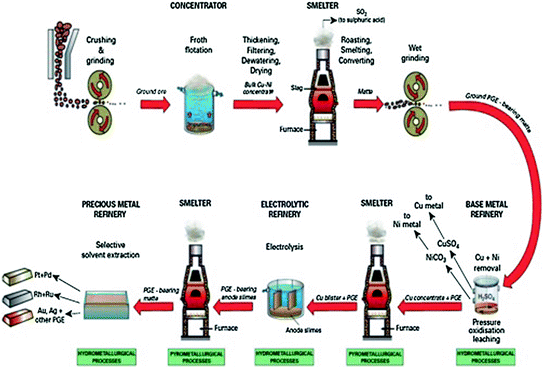
 Mining and Refining of Nickel Ores   Mining  Nickel is found in two different types of ore, magmatic sulfide and laterite. The former are usually mined by underground techniques or in large and deep open pits for some new deposits; the latter are mined in shallow pits using heavy earth-moving equipment such as shovels, draglines, and front-end loaders.  Treating Sulfide Ores Beneficiation -— Benficiation is the next step. It converts the ore into a form that can be smelted to separate the metal. The goal of the process is to make a smaller volume that will require less heat and chemicals to separate the metal. Sulfide ore is first ground in large mills to powder that is fine enough that the particle size is less than that of individual grains of the ore minerals. The nickel-bearing minerals are then separated from the gangue by the flotation process. The ground ore is mixed in large vats with water and chemicals such as fatty acids and oils that increase the hydrop...

global distribution of mineral deposits

Image
GLOBAL DISTRIBUTION OF MINERAL DEPOSITS  Copper and Nickel   A large proportion of the resources of this metal are tied up in a single type of deposit, the so-called “porphyry copper” or simply “porphyry” deposits . These deposits are directly associated with subduction and thus are found in island arcs and convergent margins. This is the origin of the string of deposits that extends along the entire western margin of North and South America (Fig.a) and throughout the islands of the southwest Pacific (Indonesia, Philippines, etc.). Large deposits of the same type are also found in accreted island arcs that have been incorporated into continental collision zones, as in the Alpine-Carpathian-Himalayan belt. Another major class of copper deposits formed in mature sedimentary rocks in intracratonic basins, as in the deposits of the central African “copper belt”.  Copper is also found in deposits associated with volcanic rocks, as in the volcanogenic massive ...

classification of ore deposits

tectonic classification of ore deposits  Deposit type sub-classes I. Deposit at oceanic ridges (divergent plate margins) volcanogenic massive sulfide deposits (Cu Zn) Sedimentary exhalative deposits (Zn, Cu, Pb, Au and Ag). e.g. Red Sea Mn nodules (Mn, Ni, Cu, Co …) Cr, PGE, asbestos in ultramafic rocks II. Deposits at convergent plate margins Porphyry Cu-Mo deposits Other base metal deposits (Cu, Pb, Zn, Mo) Precious metals (Pt, Au, Ag) Pb–Zn–Ag veins and contact metasomatic deposits Other metals (Sn, W, Sb, Hg) III. Deposits in cratonic rift systems Deposits of Sn, fluorite, barite in granites Evaporites in rift basins Carbonatites containing Nb, P, REE, U, Th and other rare elements IV. Deposits in intracontinental settings Ni and PGE in layered intrusions ...

Popular posts from this blog

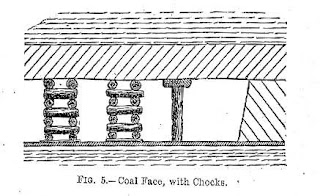
Different types of timber support

Indicated , inferred, measured resources

Timber support for different places in mine

50 common word roots, prefixes and suffixes

Options, Call & Put options, futures

Sandstone uranium deposits

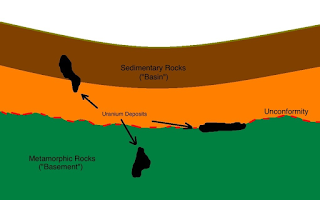
Unconformity-Related Uranium Deposit

Roof support in underground coal mine