Posts

Showing posts with the label Rocks

Metamorphic Roks

Image
METAMORPHIC ROCKS Metamorphic rocks are altered forms of pre-existing rocks which might have been igneous or sedimentary. The alternation may be due to either heat or pressure or by both acting together. Un er t e effect of pressure and temperature certain of the original miners are no longer stable and give place to new minerals. Quartz, e spar, and hornblende are stable under both igneous and metamorphic conditions. In addition to new minerals, new textures arise during the process of alteration or metamorphism. Rocks not altered beyond recognition include quartzite (from sandstone) and slate (from clay). Rocks altered beyond recognition include rocks known as gneisses and schists. The original rock-forming material and the names of original rocks and metamorphic rocks produced by it are given below. Mineral Original rock Metamorphic rock Sand Sandstone Quartzite Clay Shale Slate, mica-schist Calcium ...
Sedimentary rocks

Image
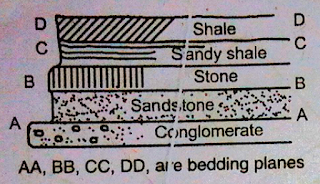
Sedimentary Rocks Sedimentary Rocks Sedimentary rocks include all rocks formed by deposition in beds or layers (strata) of the material derived from older rocks and also cover rocks formed by chemical or organic agencies. The materials may be carried by water, wind or glacier, e.g., in the case of sandstone, shale, etc. The majority of these sedimentary rocks are formed by deposition on riverbeds, or seabed and into basins or depressions on the earth's surface. The consolidation of loose sediments into hard also by deposition of cementing materials into spaces between particles of the sediments. The chief cementing materials or some mineral finely spread throughout the rock. The colour of the rock often changes on account of alteration of the original constituents due to atmospheric agencies, chiefly water. The sedimentary rocks were formed practically in the horizontal position but due to earth movements associated with earthquakes or other causes, they were tilted from the horizo...

Rocks

Image
types of rocks Rocks are divided as follows into three great groups based on the origin and mode of formation.  Igneous Rocks: Those that have consolidated at or relatively near the earth's surface from molten material called magma originating from within the earth.  Sedimentary Rocks: Those produced chiefly by the breaking up of pre-existing rocks and deposition of the broken material in the form of layers.  Metamorphic Rocks: Those produced from pre-existing rocks by the action of high temperatures and pressures. The rock cycle Igneous Rocks Igneous rocks are formed by the cooling of molten material called magma, at or relatively near the earth's surface. Magma is a Naturally formed mixture of molten rocks and minerals deep down the earth. The constituents of magma are mostly complex silicates and oxides of iron, aluminium, magnesium, calcium, sodium and potassium. Silica is always present in 35 to 75%. Most of the constituents of magma are nonvolatile with fusion temp...

Popular posts from this blog

Different types of timber support

Indicated , inferred, measured resources

Timber support for different places in mine

50 common word roots, prefixes and suffixes

Options, Call & Put options, futures

Sandstone uranium deposits

Unconformity-Related Uranium Deposit

Roof support in underground coal mine